In March 2025, the EPA formally issued its bilingual pesticide labeling policy under the Pesticide Registration Improvement Act of 2022, known as PRIA 5. The law requires Spanish translations for key sections of end-use pesticide product labels on a rolling schedule that began in December 2025 and runs through 2030.
The implementation timeline is phased by product type and toxicity
- December 29, 2025: Restricted Use Pesticides (RUPs) and the most toxic agricultural products. Acute Toxicity Category I products, identified by the signal word DANGER, must carry Spanish translations of their health and safety sections.
- December 29, 2026: EPA-registered antimicrobial and non-agricultural products with a DANGER signal word must comply. Registrants must also report compliance through EPA's MyPeST platform by January 30, 2027.
- December 29, 2030: All end-use pesticide product labels must include Spanish translations of their health and safety sections, no exceptions.
Translations must appear either on the product container or through a hyperlink or scannable QR code that gives users immediate access. EPA provides step-by-step instructions for reporting compliance through MyPeST, a web-based system that replaces the Pesticide Submission Portal and gives registrants a dashboard for tracking application status and bilingual labeling compliance.
Why this matters beyond the label
This is where most operators stop reading, and where the real operational risk begins. Spanish is the primary language for most American farmworkers, and the policy aims to make health and safety information on pesticide labels more accessible, improving understanding of and compliance with label instructions.
That is the regulatory intent. For pest control operators managing commercial accounts, the practical implication is different: your technicians apply products in the field and log application data such as product name, EPA registration number, concentration, target pest and application method. That documentation is what ties your service record to the label version in effect at the time of application.
If a product label has been updated under PRIA 5 and your field documentation doesn't consistently reflect the current version, you have a compliance gap. Not on paper, in your service records.
And in an audit, whether it's an AIB, SQF or BRC third-party audit for a food processing client or a health inspection at a healthcare facility, that gap is exactly what auditors look for.
The field documentation problem most operators don't see coming
The next deadline, December 29, 2026, applies to EPA-registered antimicrobial and non-agricultural products with a DANGER signal word. Their labels must comply by that date, and registrants must update MyPeST by January 30, 2027.
In practice, this rolling schedule means the label for a product your technicians apply today may look different from the label for the same product six months from now. That's normal in regulatory compliance, but it creates a specific documentation challenge: how do you make sure every technician, on every service, logs product information that matches the current, compliant label?
When field documentation lives across disconnected tools, a field app here and a spreadsheet there, the answer is that you don't. You hope.
The operators who get ahead of this aren't checking labels by hand before every service. They use platforms that standardize product application logging across every technician and every visit: EPA registration numbers captured automatically, product details recorded consistently, and application records timestamped and exportable at any moment.
That's the difference between documentation that survives an audit and documentation that creates one.
A practical checklist for field compliance
Whatever software you use, this is what your team should capture on every service visit to stay ahead of PRIA 5:
- The EPA registration number of every product applied, not just the product name, which different technicians may abbreviate differently.
- Label version or formulation where applicable, especially for products in the first two phases of PRIA 5.
- Application method and concentration per product, per visit.
- Target pest and treatment area, documented specifically, not generically.
- Technician name and certification number on every service record.
- Timestamped photo evidence from each visit, organized by client and date.
- A consistent format across all technicians.
The bigger picture: digital oversight is here
All label updates will be submitted and managed through EPA's MyPeST platform, which marks the start of dual "linguistic and digital" oversight. That phrase is worth sitting with. The EPA now has a digital trail of what every compliant label should say and when. A gap between what the label says and what your service record shows is no longer a gray area. It's a verifiable discrepancy.
Commercial clients, especially those certified under AIB International, SQF or BRC Global Standards, already request service documentation at this level. As PRIA 5 rolls out through 2030, that expectation will spread from certified facilities to commercial accounts more broadly.
Operators who build consistent, standardized field documentation now won't be scrambling when a client's auditor asks for three years of service records and product application logs in a single afternoon.
How Rupipest helps you stay ahead
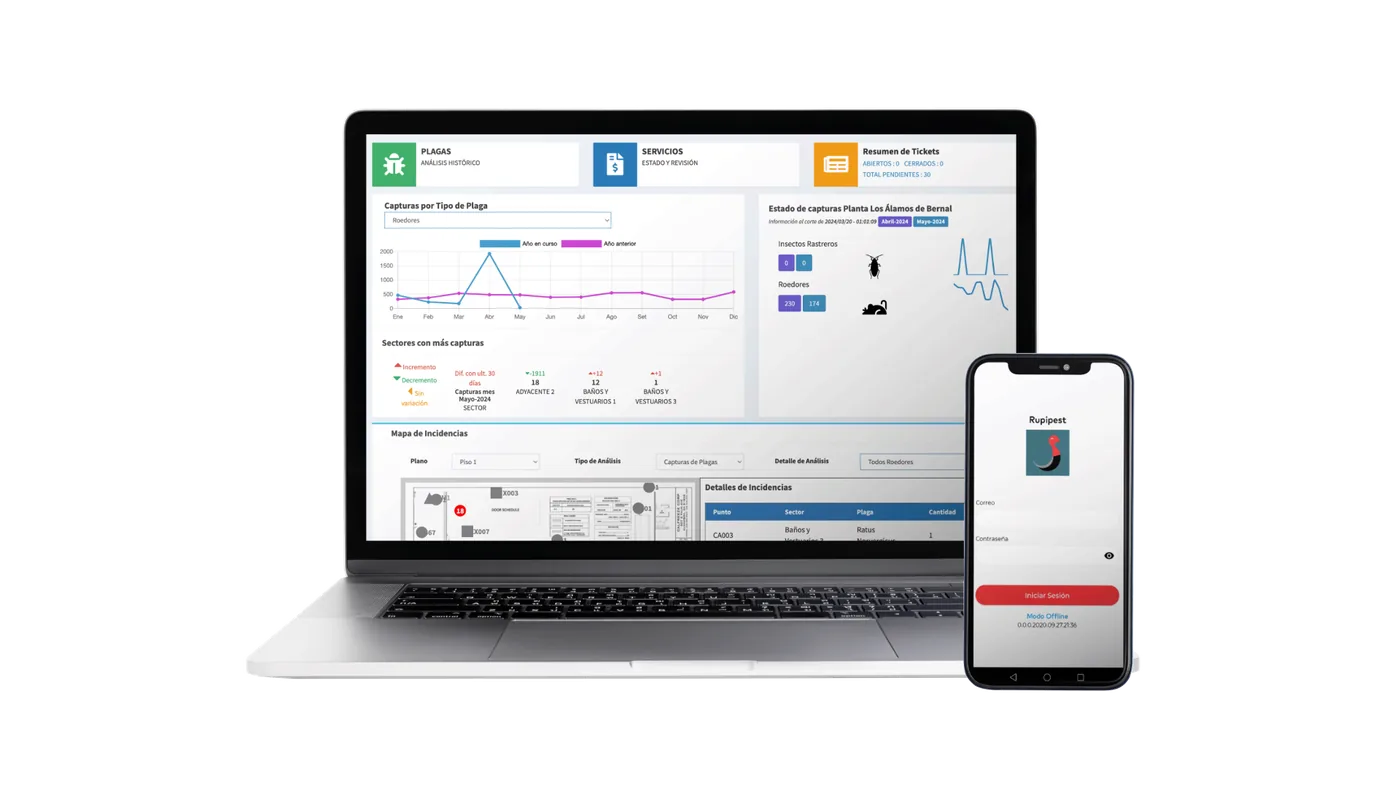
Rupipest standardizes product application logging across every technician and every visit. EPA registration numbers, products, concentrations and application areas are captured the same way regardless of who performed the service or which site they visited. Every record is timestamped, organized by client and exportable for any audit request, at any time, without manual compiling.
When PRIA 5 compliance lands on a commercial client's audit checklist, your documentation will already be ready.