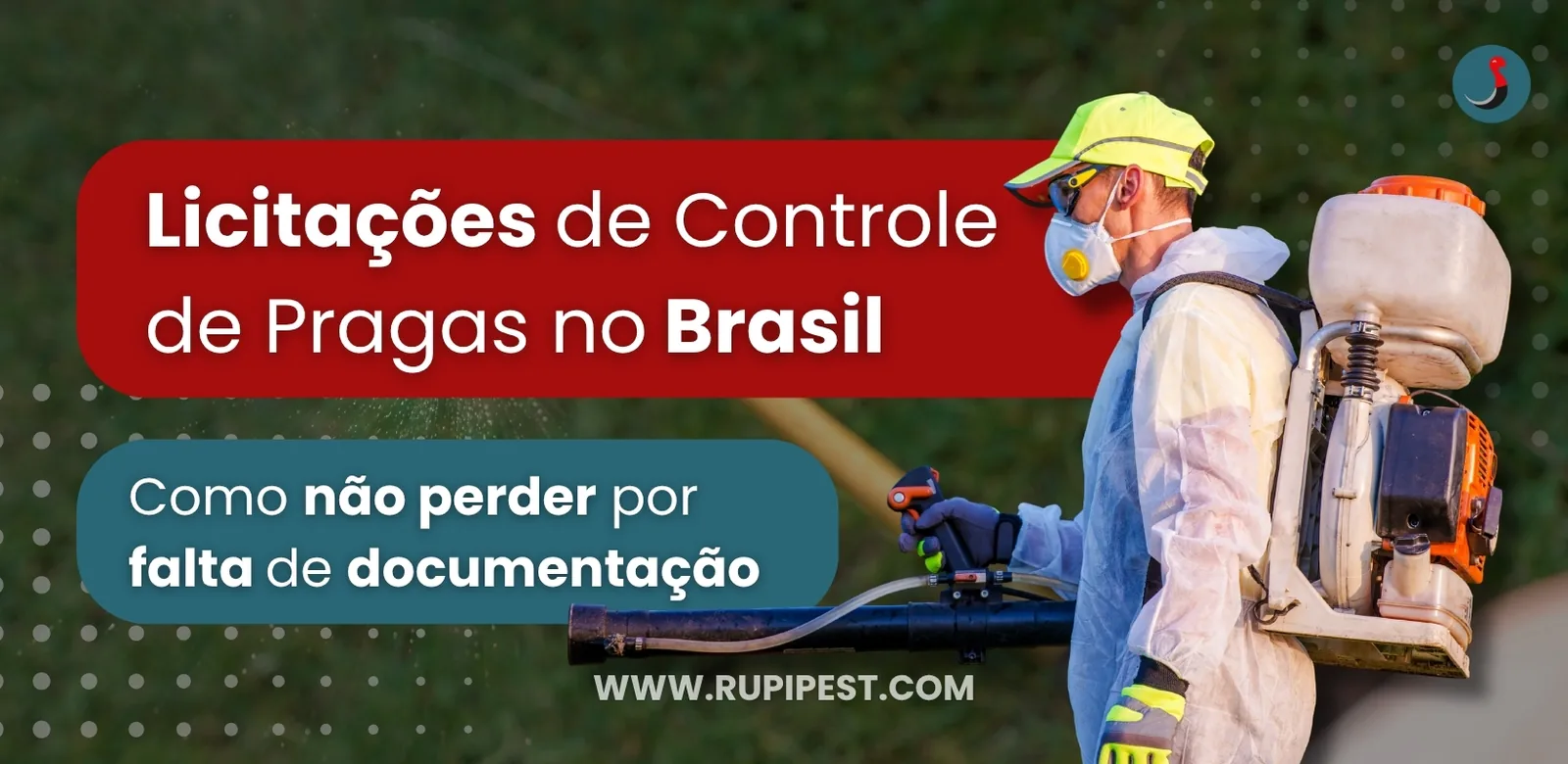
The public market for pest control in Brazil is growing. City halls, hospitals, schools, health units, federal agencies and industrial kitchens across the country regularly publish tenders for insect control, rodent control, termite control and integrated urban vector management.
It is a segment with recurring demand, long-term contracts and guaranteed payment. Yet most pest control companies never bid. The reason is almost always the same: their required documentation is not in order.
What the government is buying
Pest control tenders can bundle inspection, insect, rodent and termite control, scorpion control, monitoring, bird and bat management, application of registered products, trap installation, technical reports and post-service support. They cover schools, health units, hospitals, warehouses, kitchens, administrative buildings, terminals, outdoor areas and other public facilities.
A few real examples from 2026 show the size of the opportunity:
- The Municipality of Planalto (Paraná) published a price-registration tender for integrated urban pest control in municipal offices, valued at R$ 174,000.
- The Federal University of Amazonas opened an electronic auction for urban pest control services covering insect, termite and rodent control and bird deterrence.
- The Federal Police regional office in Mato Grosso do Sul formalized a price-registration record to hire a company specialized in integrated urban pest control, covering cockroaches, ants, spiders and rodents.
These are not isolated cases. They are examples of what happens every week in municipalities and federal agencies in every region of Brazil.
Why most companies don't bid
For a supplier, the first decision is to understand what kind of opportunity it is. Even within the same market, these contracts carry different documents, costs, responsibilities and risks.
But the biggest obstacle is not technical, it is documentation. Pest control tenders require a set of items that companies without digital processes simply cannot gather in time:
Sanitary and legal requirements:
- The main national rule for these companies is ANVISA Resolution RDC 622/2022, which requires that products used be disinfestant sanitizers duly registered with ANVISA, with a registration that matches the purpose and target pest.
- An active sanitary license and environmental license.
- A qualified technical lead registered with the professional council.
Operational requirements checked in audits:
- In sanitary inspections, ANVISA checks the validity of sanitary registrations, environmental licenses, technicians' registration with professional councils, the use of ANVISA-registered products and a copy of the proof of service with basic information about the work done.
That last point is where most companies stumble. Not because they don't do the work, but because they can't prove they did it in a standardized, traceable and auditable way.
What tenders actually ask for in reports
Tenders include reports and corrective follow-ups during the contract period as part of the scope. A supplier should not estimate the cost from the tender's short title alone.
In practice, this means that throughout the contract the company has to deliver consistent documentation on every visit: products applied with their ANVISA registration, areas treated, proof of service, the name and credentials of the responsible technician, and a record of any nonconformity found.
Companies that do all this on paper or over WhatsApp hit the same wall when the inspecting agency or contract manager asks for the last six months of records: they can't pull the information together in an organized, consistent and presentable way.
And a public contract lost over paperwork doesn't come back.
How Rupipest prepares your company for this market
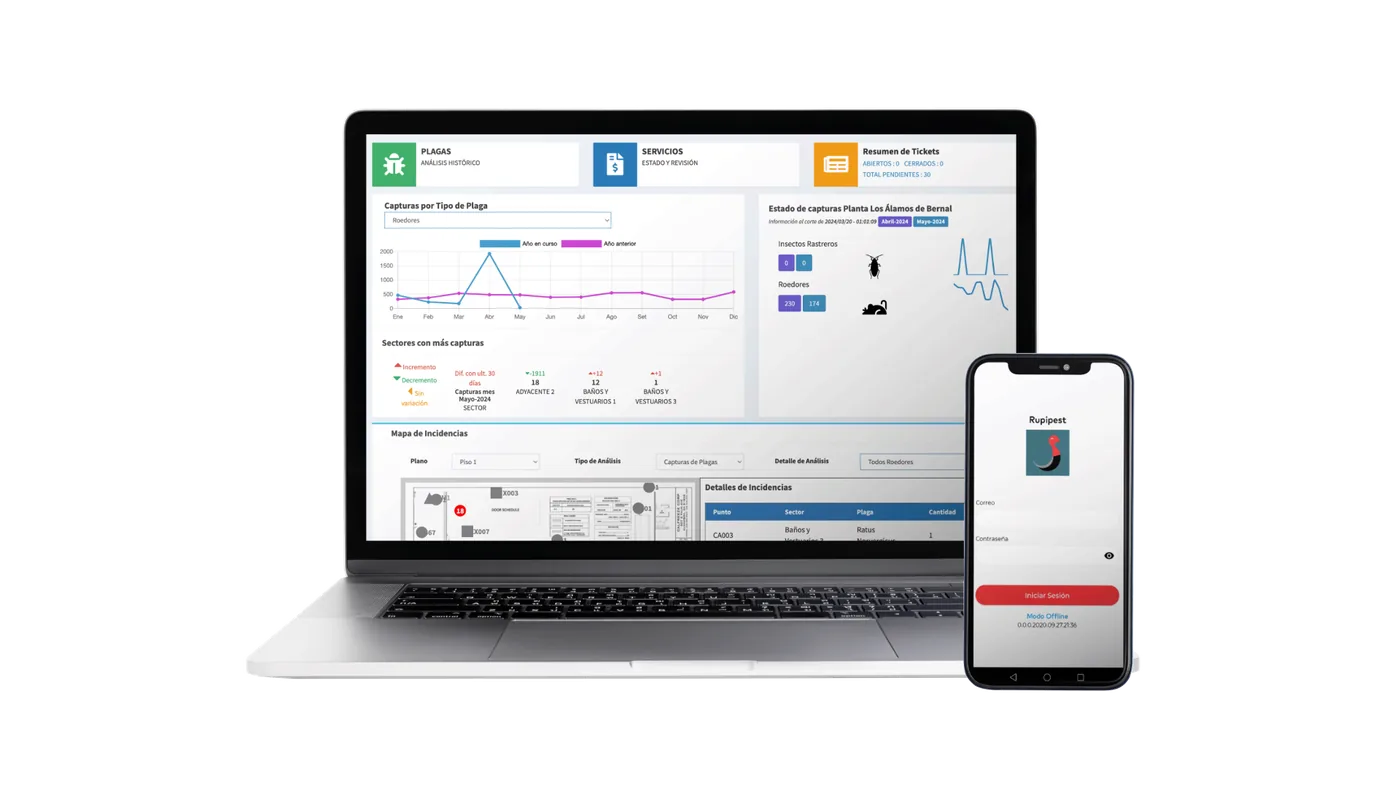
Rupipest was built so that every service automatically produces the documentation that public agencies, sanitary audits and industrial clients require, without technicians filling in manual forms or managers spending hours consolidating information.
Every visit recorded in the platform generates a standardized report with products applied, areas treated, photo evidence, technician name and timestamp. The full history of any client or contract is available in seconds and can be exported for any audit or document request.
For companies that want to win public tenders, this isn't an advantage. It's the minimum requirement to compete.