As many of you know, bed bug work in homes or hotels is painstaking: not a single spot can go unchecked.
Legend has it that some veteran pest controllers can detect bed bugs by smell alone. One of them, whom I've had the pleasure of knowing for years, recorded a video with the experience, tips and recommendations he has collected over time. You can watch the full talk here (Spanish).
First things first: biology
The pest in this post is Cimex lectularius.
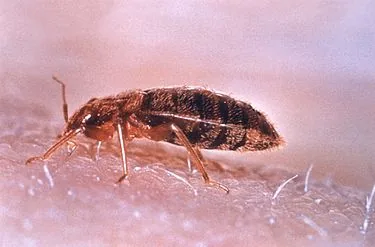
It belongs to the Cimicidae family: about 5 mm long, reddish brown, with three body segments.
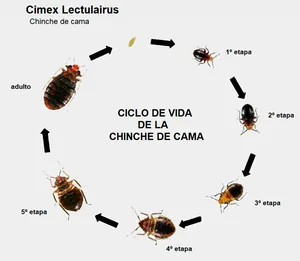
A female lays up to 500 eggs in her lifetime, 5 to 10 per day. When a client tells you how long they've had the problem, or leaves a quote hanging and comes back weeks later, you can estimate how much the population has grown.
Eggs hatch in 5 to 20 days depending on conditions, and nymphs take 7 to 18 weeks to become adults.
Bed bugs are active after sunset, with peak activity up to one hour before dawn. They can live a year to a year and a half without feeding, but given the chance they feed about every five days.
So: do a very thorough initial inspection, so you don't have to come back on warranty calls.
Second: medical importance
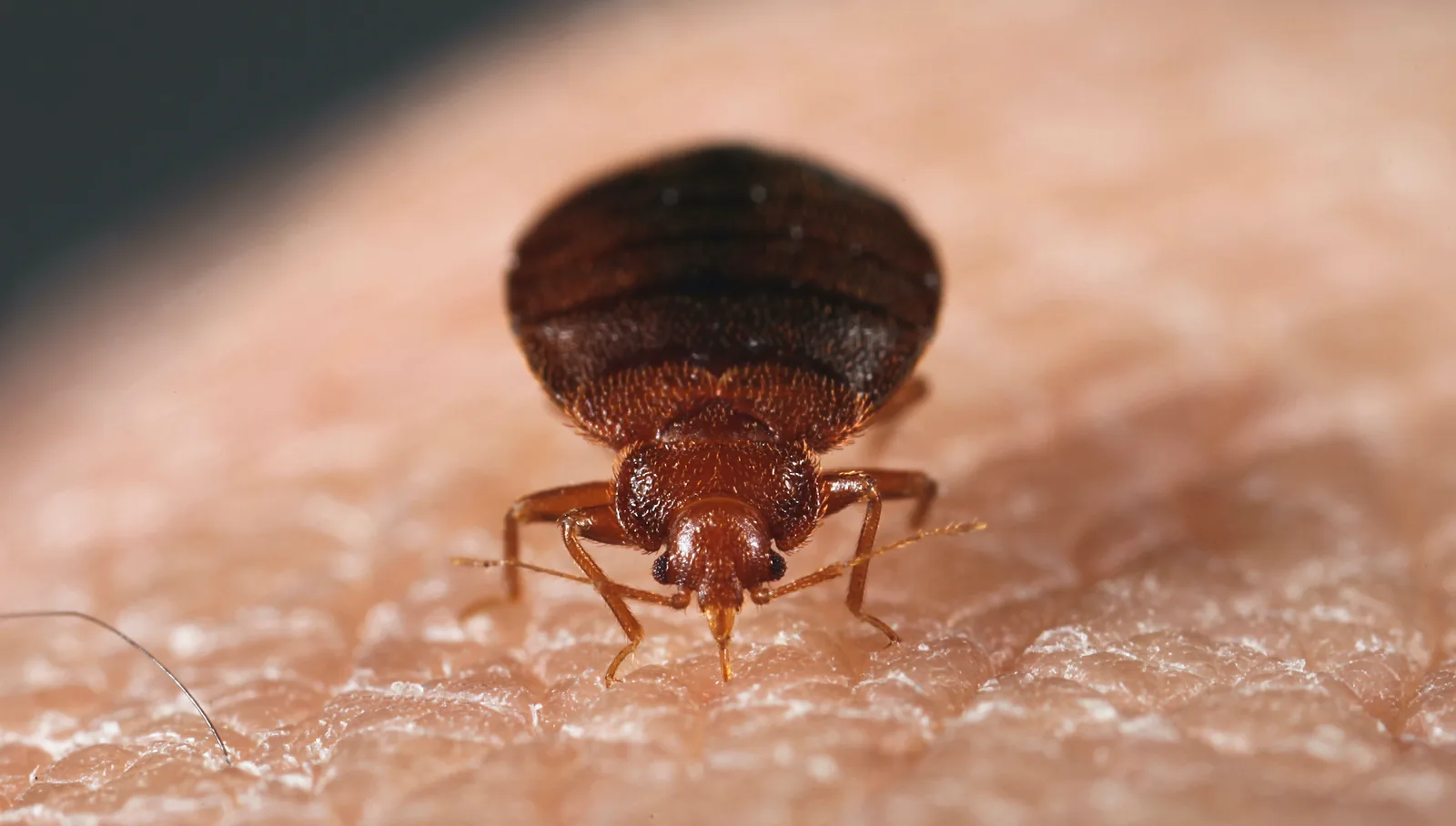
Bed bug bites are hard to diagnose because everyone reacts differently. A photo of welts from a prospect is not enough to jump to a possibly wrong diagnosis. Nothing replaces an inspection to confirm it was really bed bugs.
Bed bugs inject saliva containing anticoagulants and anesthetics into the bloodstream, which causes the swelling and itching.
At least 27 pathogens are known to live inside Cimex lectularius or on its mouthparts, and studies show it can transmit Trypanosoma cruzi, the cause of Chagas disease. There is a good article on this here.
Third: tips from experience
Experience is the best teacher, though it often comes with mistakes. A great way to avoid them is to listen to people with far more years in the field.
Focus on the contract

Back to basics: define the client's details and the costs involved. A vital but often forgotten part is aligning your client's expectations.
Also include how you will do the work, including but not limited to:
- taking apart couches
- moving furniture
- removing baseboards
- checking mattresses, frames, keepsakes, decorations and every other spot (truly no stone unturned)
Specify the areas to treat. This defines the scope of your work, which is why the initial inspection must be thorough so no space is missed and the infestation doesn't come back.
Client commitments. Put in writing what the client must do to help control the infestation, for example:
- reasonably thorough cleaning
- structural repairs
- giving technicians access where needed
- signing that they received the preparation sheet
Finally, your contract must include two vital sections:
- limitation of liability
- cancellation terms (the classic one: non-payment)
Bed bug myths and facts

Myth: bed bugs won't come out if the light is on. Fact: they prefer darkness, but a light won't stop them.
Myth: insecticides will keep bed bugs at bay. Fact: you need an integrated strategy that includes non-chemical options.
Myth: bed bugs mean a dirty place. Fact: they are attracted to heat, blood and carbon dioxide, although clutter gives them more hiding spots.
Tips
- Confirm the problem exists (positive entomological identification).
- Don't rush, and don't sell fear to the client.
- Control can be hard but not impossible. It is almost never done in one visit; the average is about 3 visits including the final inspection (which ties back to aligning expectations).
- Don't throw out mattresses or furniture, because it can spread the problem.
- Build a plan of attack. Insecticide should be the last option.
- Eliminate harborage sites. Carry caulk in the truck to seal cracks and gaps.
- Get rid of trash and clutter.
- Regularly wash bedding and dry it in a dryer, not in the sun.
- Vacuum everywhere, often.
Typical places to look
This short list doesn't cover everything, since every client is different, but it's a good starting point:
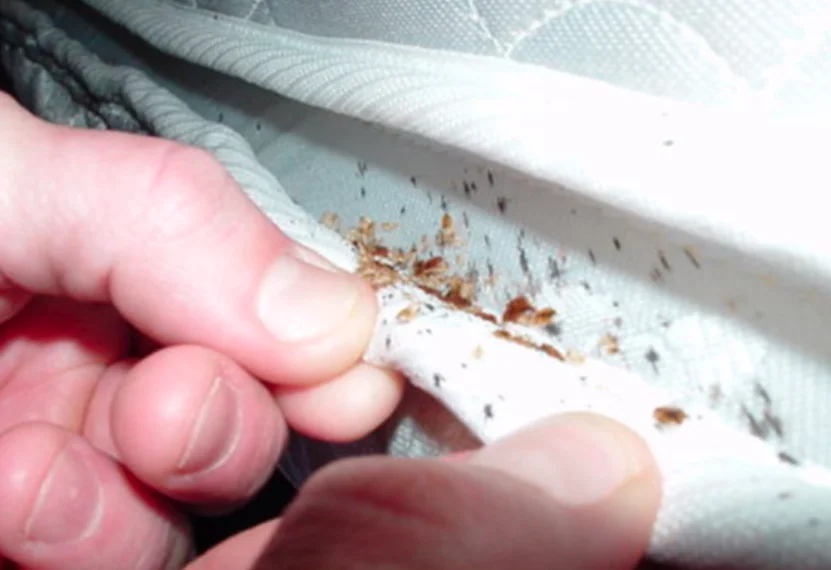
- seams of chairs and couches, between pillows and in curtain folds
- corners of drawers
- appliances and electrical outlets
- behind loose wallpaper and wall hangings
- where the wall meets the ceiling
- screw heads
- baseboards
Spotting an infestation
- physical signs of bed bugs
- rust-colored or reddish stains on sheets or the mattress
- dark spots of excrement that bleed into fabric like a marker
- pale yellow eggs and shed skins (about 1 mm)
- live bed bugs (in case you suspected!)
Hotel protocol
If you work with hotels regularly, try adding these steps:

- Put the bedding from the suspect room in black plastic bags and seal them.
- Wash that batch separately in hot water.
- Inspect the suspect room, the rooms on each side and the room across the hall.
Products used

- Precise application of natural pyrethrins.
- Neonicotinoids combined with microencapsulated lambda-cyhalothrin.
- Other methods: boric acid and diatomaceous earth. These desiccants destroy the bed bug's waxy cuticle, leaving it to die of dehydration.
- Neem oil, which our guest noted is registered with the EPA for bed bug control.
- Neonicotinoids act on nicotinic receptors, overstimulating the nervous system until it fails.
- Insect growth regulators.
Always follow the product label and your state's regulations.
True Integrated Pest Management: a wake-up call
The most important lesson for every pest control company: pesticides are the last option.
Not convinced? Bed bugs in New York City were found to be 264 times more resistant to deltamethrin than those in Florida, due to a nerve cell mutation. See the study here.

Many thanks to Fumigaciones del Bajío for taking the time to share their experience. They are a long-time friend and Rupipest user.