
Over the years I have talked with many pest control owners, and one fear keeps coming up. Especially for those who manage teams of field technicians, and even more for those with industrial clients audited under an international standard.
Owners always ask: "How do I make sure my technicians are working according to company policy?" 🤔
From the stories I've collected, here are a few common ones.

The power of imagination
Meet Juan. He has an industrial food client with a large area to cover. Juan sends his technician to check the 50 bait stations.
The technician does the work well but doesn't write anything down. At the end of the service, he fills in the log from memory, and when memory isn't enough... he turns to imagination. 🤦
When Juan told me this he was worried, because making up data is never a good idea, especially when an unannounced audit shows up.

The flash technician
Then there is Mateo, another pest control owner. Last week his technician quit, so he has to cover the route until he finds a replacement.
Mateo arrives at the client, goes through security and reception, and gets to work. After three tiring hours, he passes reception again and the guard says: "You're still here? The last guy only took 40 minutes." 😱
Can you imagine Mateo's face? How could a service that takes 3 hours to check every control point and document it properly have taken the previous technician only 40 minutes?

Mateo did what any worried owner would do: he requested the records of every visit his company had made to that plant. The same thing had happened for all 5 months they had been working with that client.
The technician wasn't doing the full service, and when he left he killed time until the next stop. And yes, Mateo asked himself the same thing you are asking now: how do you know it was only that client? What kind of service is the market getting?
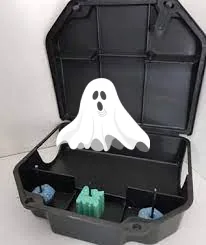
The ghost bait station
One more story: Raúl owns a large pest control company and found an irregularity in his operations. The good news is that he found it. The bad news is that he found it in the middle of an audit.
Like you, Raúl rotates technicians. For an important client, technician 1 goes in the first half of the month and technician 2 in the second half.
Technician 1 reports that bait station #29 is missing. Two weeks later, technician 2 reports that everything is fine. The next round, technician 1 again reports station #29 missing, and technician 2 again reports everything fine.
It's the haunted bait station 👻. This went on for a couple of months.
When the audit came, Raúl presented the report he had compiled (blindly) and, as you can guess, the auditor flagged the irregularity. Technician 2, in a hurry to finish, had simply been reporting that everything was fine.
So what now?
I have hundreds of stories like these, but by now you have a clear idea of why follow-up matters. It saves you headaches, ensures excellent execution and, above all, shows the client you are professional.
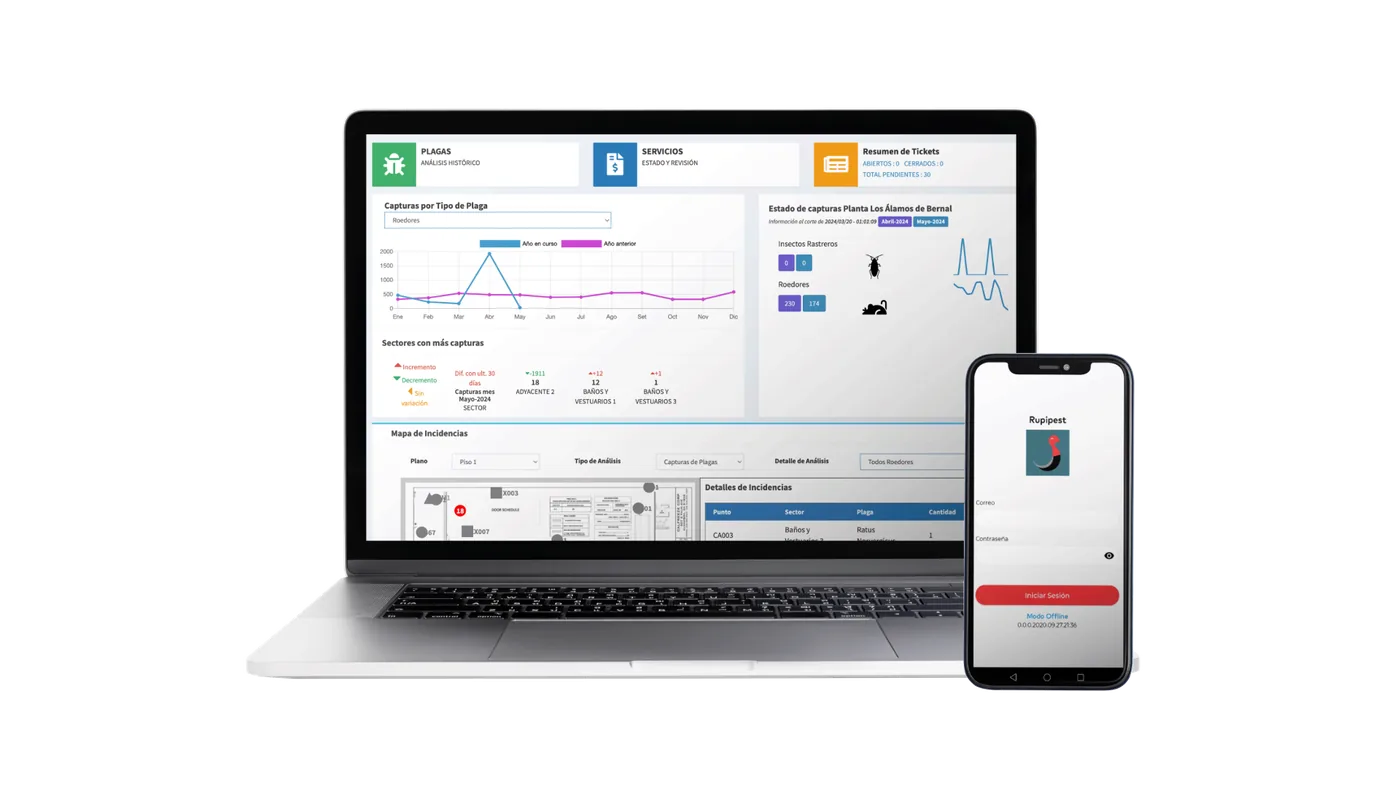
You are probably thinking that riding along with every technician every day is impossible, and it is. There are more efficient, scalable ways to do it. One of the most effective is software, which gives you that follow-up and control without investing too much time or money.
Juan, Mateo and Raúl aren't their real names, but the people behind them are real. Today they use Rupipest. One of them has been with us for almost two years and his follow-up problems are solved, which gives him a big advantage over the competition.
That is part of why we exist: Rupipest was born so you can have clarity about your business and what happens in the field, automatically and in real time.