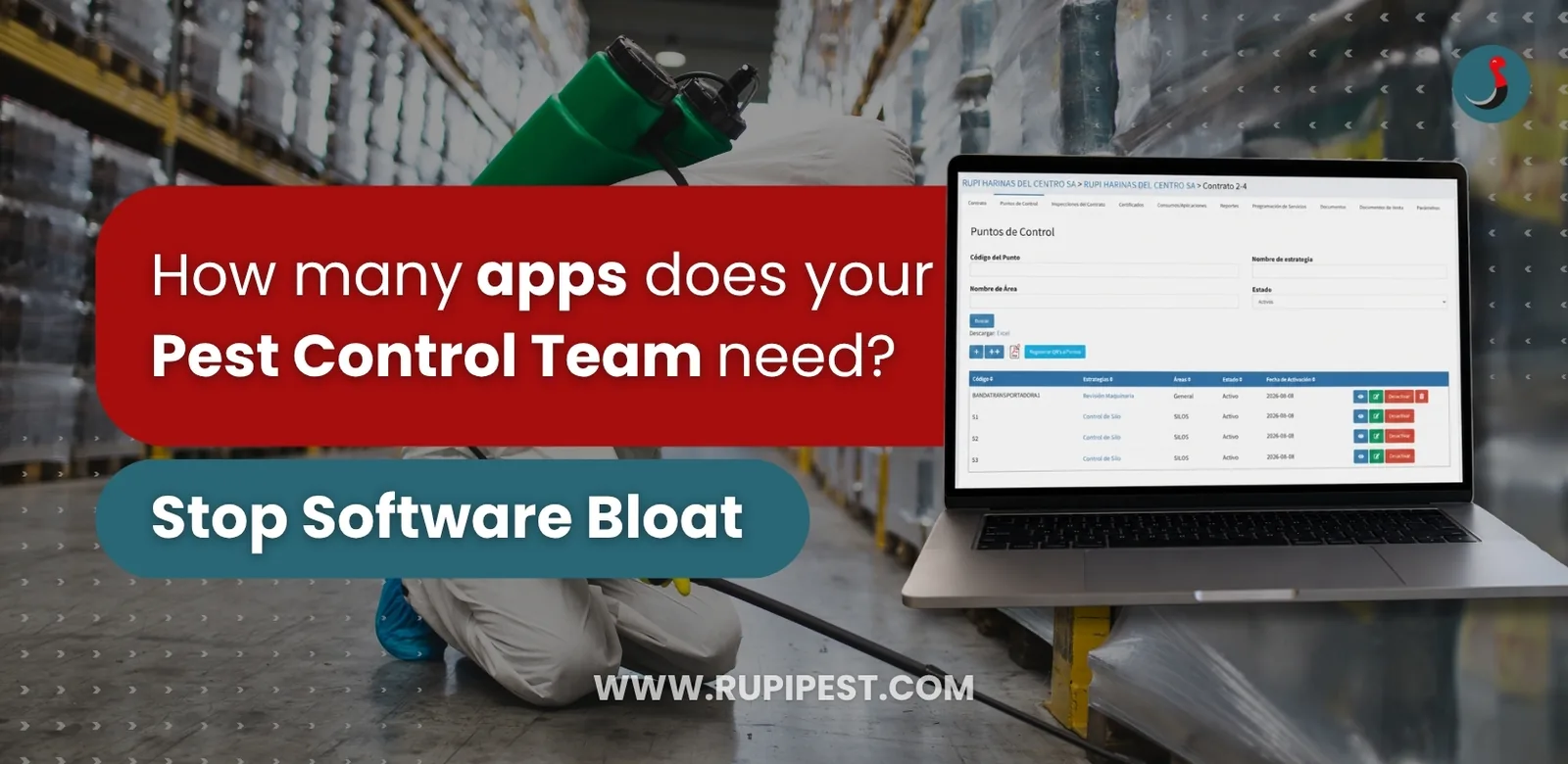
In commercial pest control, efficiency isn't just about how fast a technician can inspect a rodent bait station or treat a perimeter. It's about how cleanly data moves from your front office to the technician's truck and, ultimately, into the client's hands.
We keep seeing the same pattern: the average PCO relies on two or three separate software tools just to complete a single service cycle.
A typical setup looks like this:
- Tool #1: a desktop calendar for scheduling and dispatch.
- Tool #2: a third-party GPS or mapping tool for routing.
- Tool #3: a standalone mobile app or paper binder for field documentation and logs.
On paper, each tool does its own job reasonably well. But look closely at the workflow and the gaps between those apps are where productivity, data accuracy and margins quietly disappear.
Audit gaps in fragmented operations
When documentation lives across platforms that weren't designed to work together, the risk isn't just inefficiency. It's incomplete records showing up exactly when completeness matters most.
- Manual data handoffs: every time an office manager copies route details or inspection notes from one system to another, data can be entered wrong, inconsistently or not at all. In an audit, one missing field in a pesticide application log can put an entire account at risk.
- Sync delays and lost records: technicians often work in concrete basements, food plant coolers or remote warehouses. When separate apps fail to sync offline data, inspection records get lost, timestamped wrong or entered hours after the service, leaving a trail that doesn't hold up under scrutiny.
- Inconsistent formats across technicians: when each tech documents service their own way across disconnected tools, records look different from visit to visit and tech to tech. Third-party auditors don't just want the data, they want consistency they can trust across months of history.
If even one stop a day on an eight-stop route produces incomplete or inconsistent documentation, that's a compounding audit risk across hundreds of visits a year. For accounts under AIB International, SQF or BRC certification, that risk translates directly into lost contracts.
Why independent PCOs are moving to unified operations
National brands don't win high-value commercial accounts because they have better chemistry. They win because they deliver enterprise-grade documentation that facility managers and third-party auditors can access, verify and trust instantly.
Independent operators scaling successfully in 2026 are replacing fragmented stacks with single-platform systems that make auditability automatic, not an afterthought:
- Complete digital audit trails: every visit logged with technician name, timestamp, GPS location, pesticide registration numbers, dosage and photo evidence.
- Consistent documentation across every tech: one platform means one format, every time, regardless of who did the service or where. When an auditor compares a record from six months ago with last week's, they have the same structure.
- Self-service client portals: facility QA managers get instant access to trend analysis, service logs and compliance documents without calling your office, so your records are available the moment an unannounced audit begins, not two hours later.
Streamline your operation with Rupipest
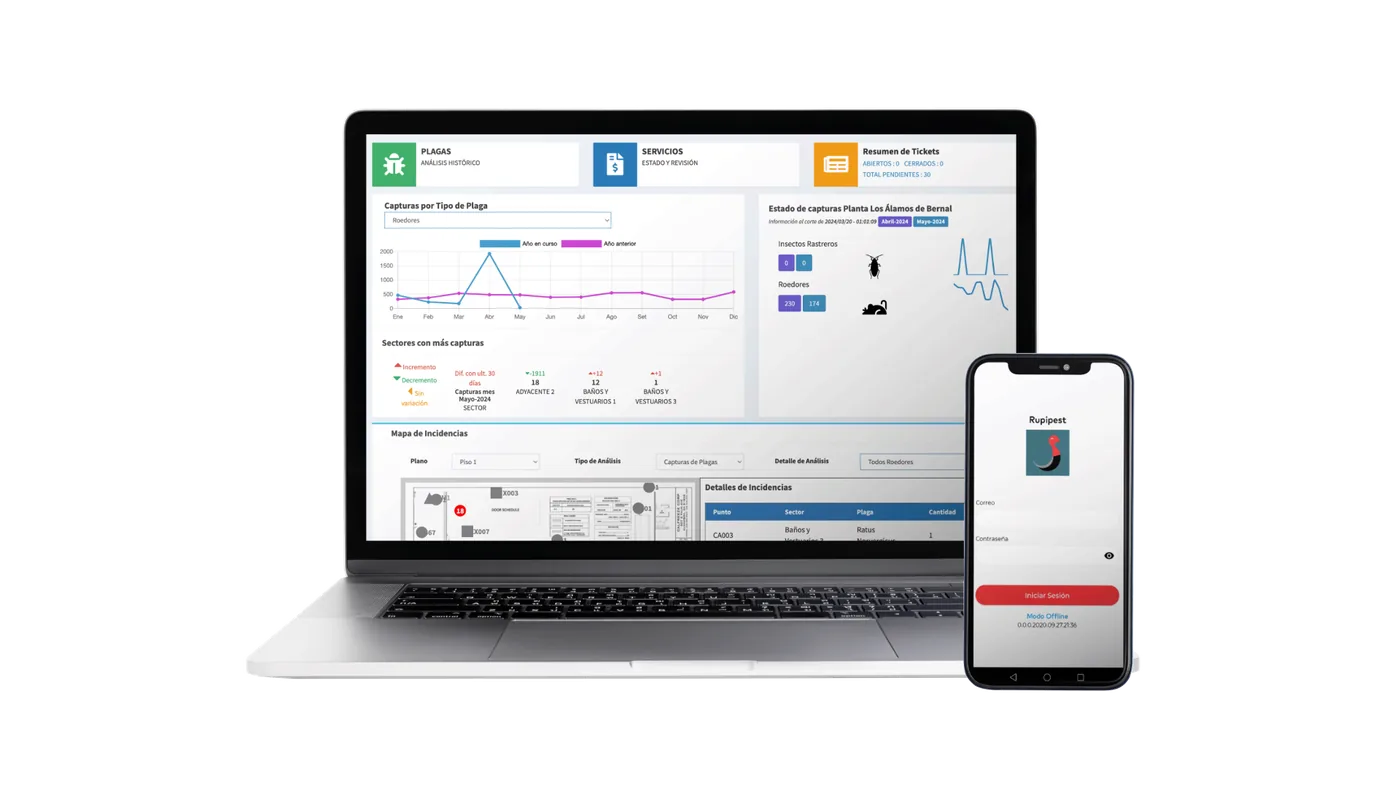
We built Rupipest to replace fragmented stacks with one clean, mobile-first platform for scheduling, field documentation, trend reporting and client portals.
The goal wasn't to pile on complex features but to build intuitive software your technicians master on day one, without long training manuals.
If incomplete records or inconsistent documentation across tools is creating audit risk in your commercial accounts, see how a unified platform closes those gaps.