Something happens in pest control more often than it should. Companies do good work in the field, deliver their services and answer their clients, but when it's time to hand over the report, it doesn't reflect all that effort.
That's where the problem starts, because today a service isn't measured only by what you do, but by what you can prove.
When the report doesn't match the service
It's common to see reports with incomplete information, unclear data or too little evidence. Not necessarily because the work was poor, but because the process of documenting it isn't optimized.
The technician finishes, jots down the essentials, and the report becomes just another chore. For the client, though, that simple document is everything. It's their proof of what was done, what was found and what risks exist. If the report doesn't communicate that well, the value of your service simply disappears.
So the real question isn't whether you should improve your reports. It's where to start.
The report as a tool, not an obligation
A good report completely changes how the client sees you. It shows order, control and follow-through. It gives them clarity about their site and confidence in whoever provides the service.
It isn't just a technical document. It's a tool that backs up your work, makes audits easier and can help you keep and grow your contracts.
The problem is that reaching that level of detail by hand isn't always practical. That's where structure makes the difference.
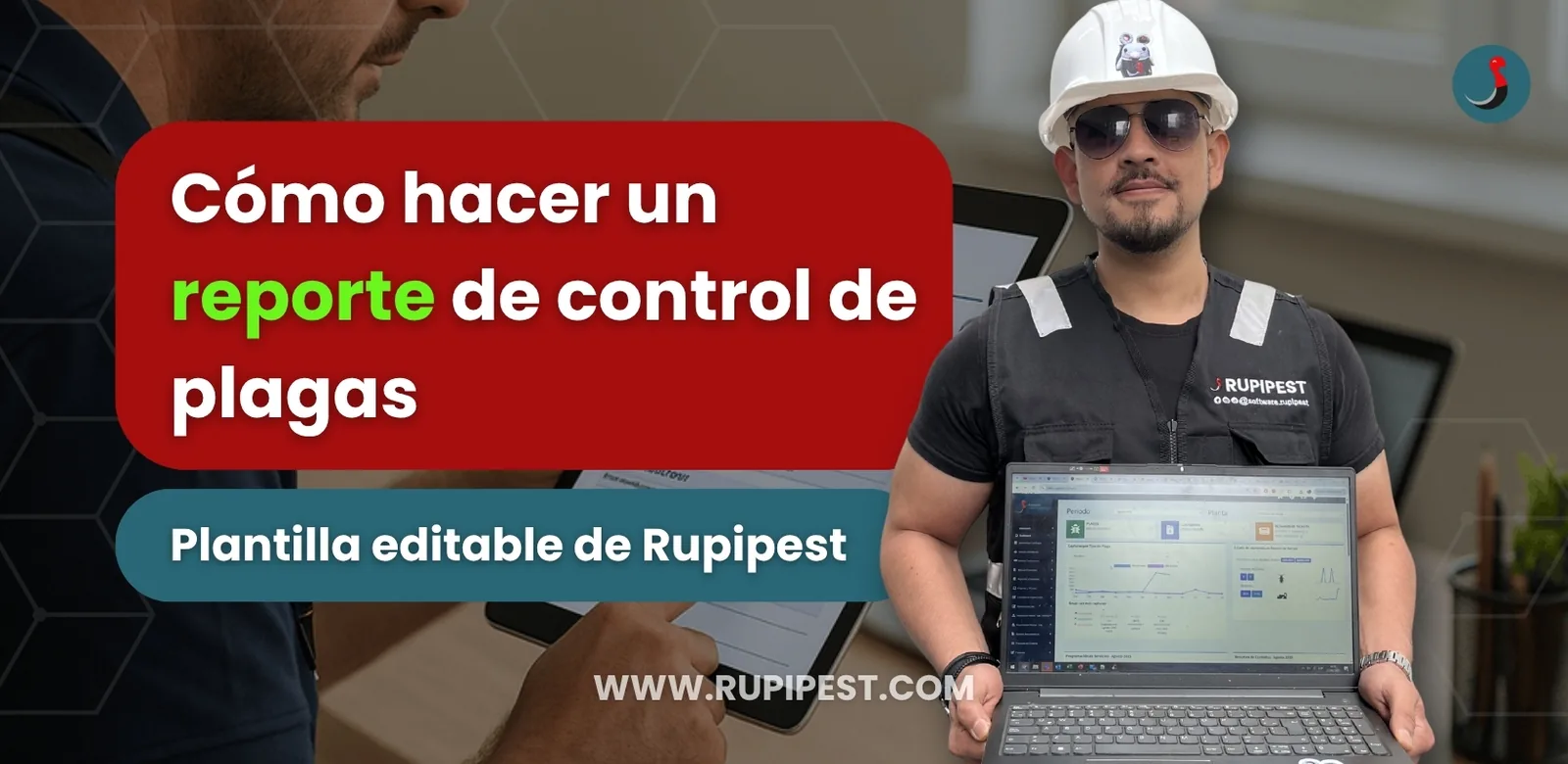
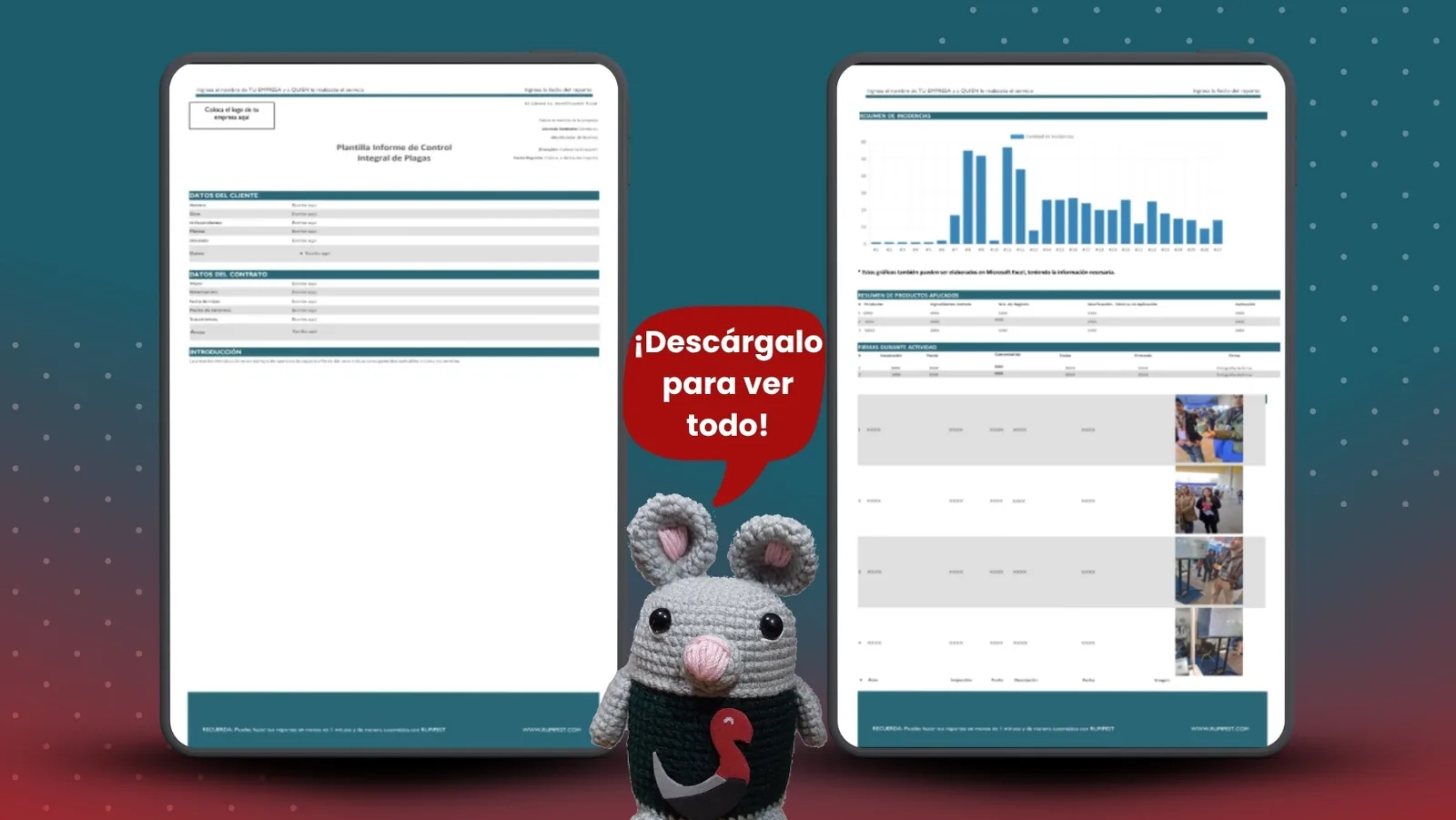
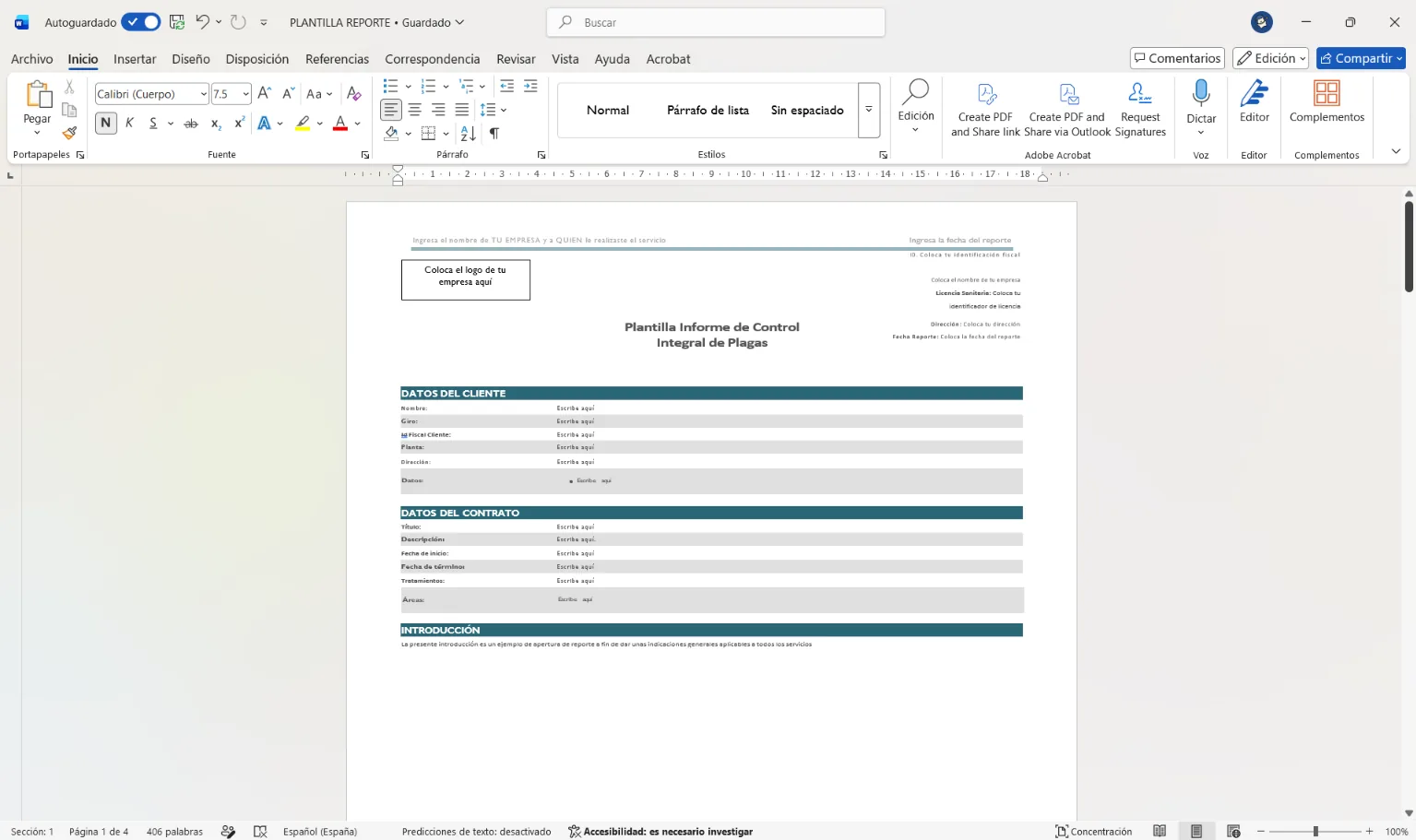
That's why we built a ready-to-use pest control report template with the key elements every complete report should have. Get the template here and use it as a reference for your own reports.
Structure exists, but consistency is missing
Having the template is the first step. The next is using it with discipline. The template doesn't analyze anything for you: you're the one who reads the data, spots trends, reviews history and understands how pests behave over time.
What it does give you is the right framework so that information stays clear and consistent, no matter who performs the service.
A good report doesn't just show what happened. It helps you understand what's happening and what to do next. In essence, it takes everything you already do in the field to a more professional level.
A starting point, and when it stops being enough
This template is a great starting point for companies that are just beginning or want to move to more professional reports without overcomplicating things. It helps them organize information, structure each service better and start delivering clearer, more complete reports.
In many cases that alone is a big improvement over messy, incomplete or hard-to-read reports. But as the operation grows, things change: more clients, more services, more requirements and, above all, more pressure to deliver clear information on time.
That's when time becomes the critical factor. Updating reports, consolidating data and validating information start consuming more resources than they should. And an unavoidable question comes up:
How much time are you investing in something that could be done better?
From recording information to real control
The difference shows when recording stops being an extra step and becomes part of the service itself.
When data is captured on the spot, photos are attached automatically, and products, doses and observations don't depend on memory or scattered notes, everything changes. Information stops being fragmented and starts making sense.
That's where going digital stops being optional and becomes a necessity.
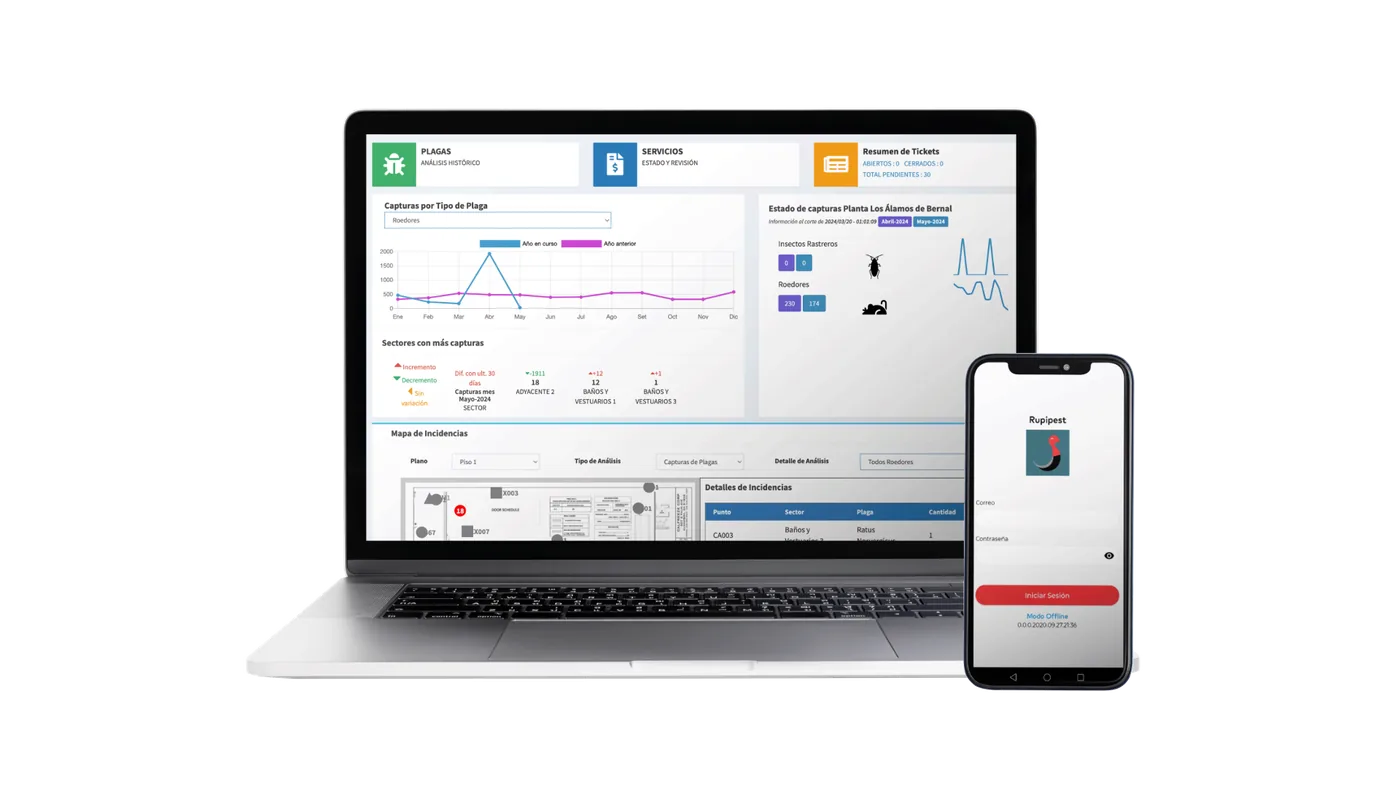
With tools like Rupipest, the whole operation lives in one place and the report is no longer built by hand. It's generated from real, complete and organized data in minutes.
And the change goes deeper than it looks.
It's no longer just about delivering a report, but about clearly proving the value of your service: answering with data, having backup in audits and showing results over time.
Because, in the end, digitizing is not the same as transforming.