

If you've ever been through an audit, you know it can be tense. Whether you serve food, pharmaceutical or any other regulated industry, an audit can shape the future of your pest control company.
The worst part is that many businesses fail on things that better organization would have prevented.
Here are the 9 most common audit mistakes and how to avoid them with good planning and automation.
1. Poor planning
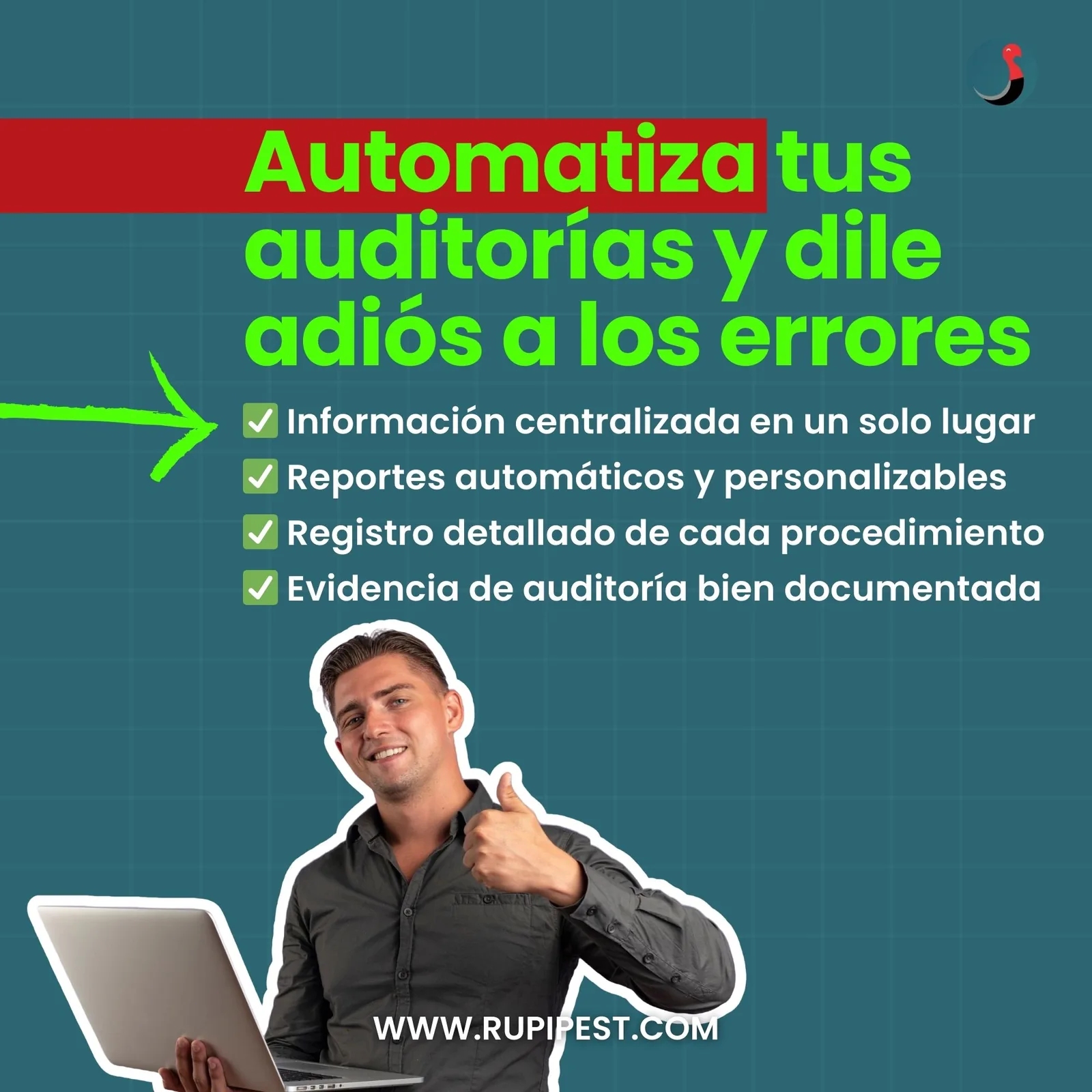
If you wait until the last minute to prepare, something will slip. The key is organizing your information from day one. With a platform like Rupipest, all your reports are ready in one click.
2. Weak risk assessment
Not identifying critical points before the audit is costly. Are your reports up to date? Is your team following the right procedures? With ongoing risk assessment you can spot problems before an auditor does.
3. Not enough audit evidence
Imagine the auditor asks for proof of a treatment and you can't find the reports. Fatal mistake. Digital documentation and automatic history will save you this headache.
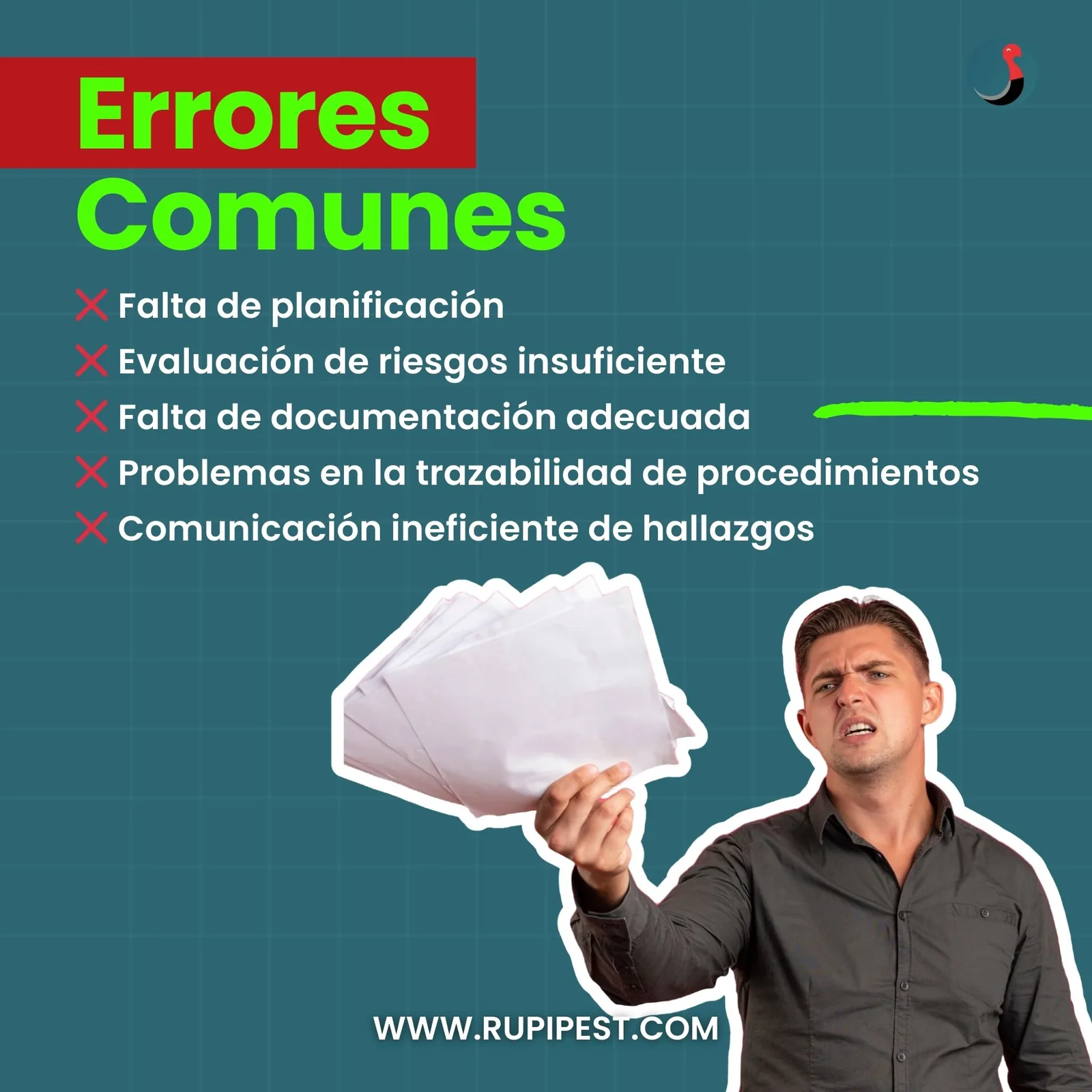
4. Missing information
Saying you did a service isn't enough. You have to prove it with clear data. Record every visit, application and finding in detail. With Rupipest all that information is centralized and available when you need it.
5. Inadequate documentation
A poorly made report can cost you your client's trust. Make sure every document is well structured and meets the required standards.
6. Not evaluating internal controls
If it isn't clear inside your company who does what and how processes run, an audit can become a nightmare. A management system gives you clarity on every operation.
7. Documenting too little, or the wrong way
Recording data by hand or in outdated formats only causes problems. Specialized software lets you keep records in real time with the level of detail required.
8. Not communicating findings and recommendations
If you find a problem but don't tell your team or client, the audit will, and not in a good way. Automated reports and alerts can spare you a lot of trouble.
9. Procedures with poor traceability
Knowing who did what, when and why is key in any audit. If your processes lack clear traceability, the auditor may consider them unreliable. Software with detailed history fixes this immediately.