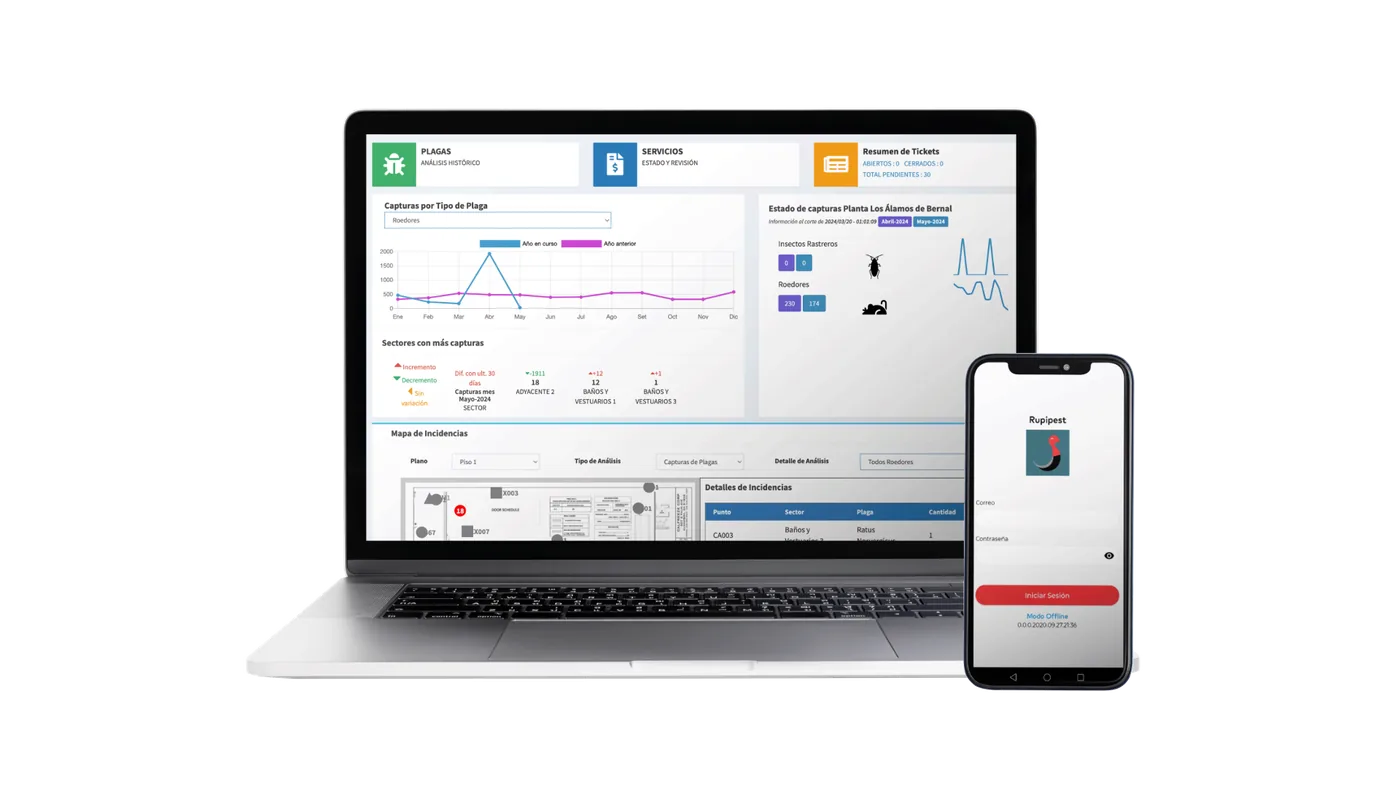
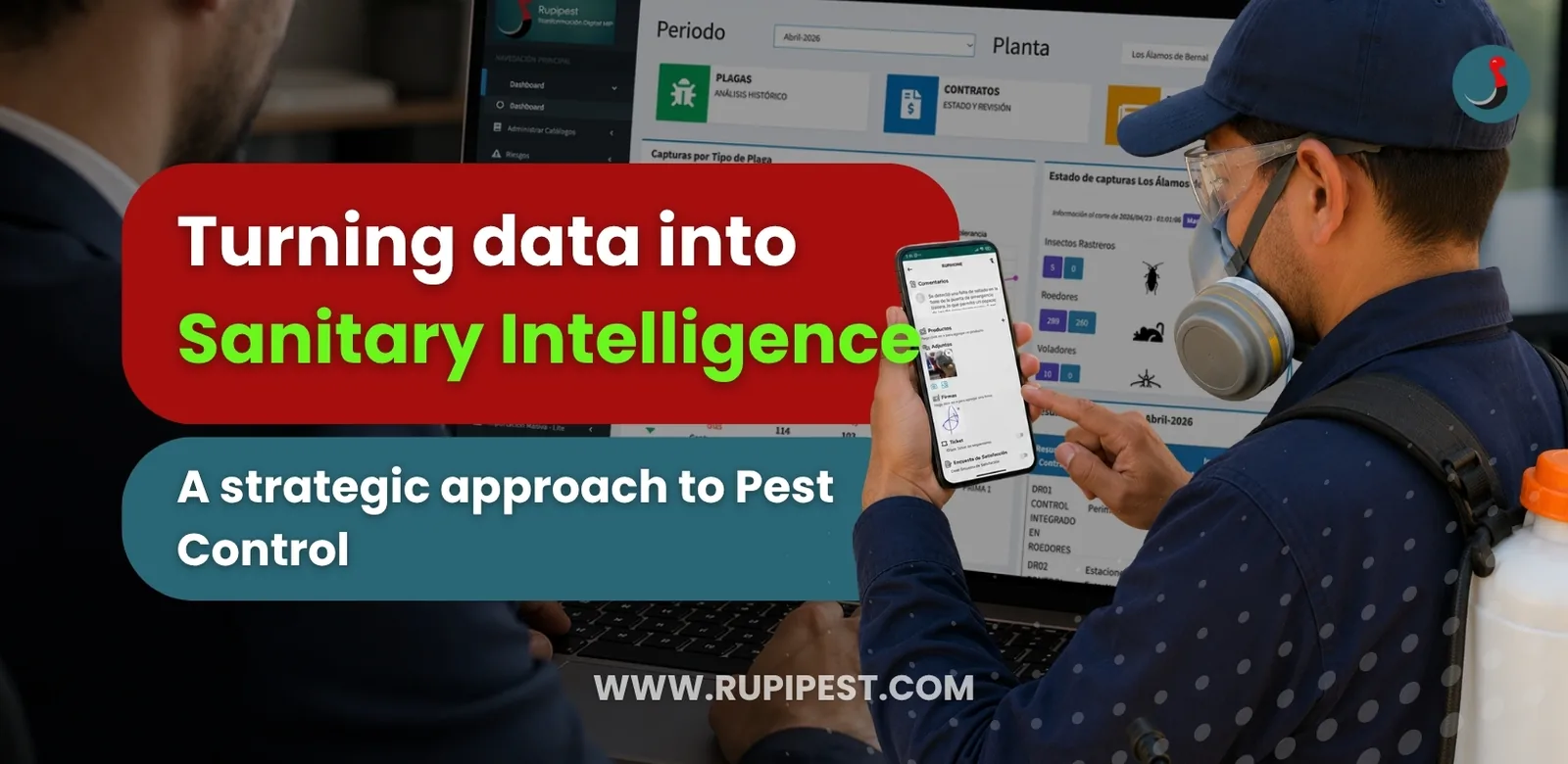
Many pest control companies live with a paradox: they collect huge amounts of data but fail to turn it into results. As discussed in a recent RupiConversatorio session with Eng. Maicoln Rico, the industry is at a crossroads.
The problem: data as a record, not a tool
Rico highlighted a common pitfall: companies treat data as an administrative requirement. Whether it lives in Excel files or paper logs kept for auditors, it quickly goes stale.
If data doesn't trigger a specific, strategic decision, it isn't information, it's just a record. Many businesses keep operating by habit, holding the same treatment frequencies, like monthly fumigations, simply because "that's how it's always been done." That's not only inefficient, it often ignores the root causes of infestations.
Moving toward sanitary intelligence
Real change happens when we stop seeing pest control as a series of isolated manual tasks and start seeing it as a strategic process. Rico outlined a five-phase model:
- Data capture: gathering reliable operational data through inspections and sensors.
- Context: this is where raw data gains meaning. It's not just a capture, it's understanding the why and the where. Are there trends in specific zones? Does the facility's schedule create gaps that favor pests? Context turns a report into a story.
- Risk analysis: not every sighting needs an emergency response. By telling an isolated incident apart from real population pressure, teams can run a formal risk assessment and focus on high-impact zones instead of spreading resources too thin.
- Decision making: with clear risk analysis, companies make informed, shared decisions, such as adjusting frequencies to seasonal trends or working with maintenance on structural issues, instead of only treating symptoms.
- Feedback: the cycle closes by checking whether the action worked. If the risk level hasn't changed, the strategy is adjusted.
The new role of the technician
The biggest change suggested in the talk is the technician's role. In the traditional model, the technician executes tasks: setting traps, applying products and filling out paperwork. Under sanitary intelligence, the technician becomes a risk analyst who spots patterns, quantifies exposure and gives the client strategic advice.
Everyone benefits. Clients get more effective, predictive service that lowers their overall risk and cost. Providers escape the "commodity" trap, where they're judged only on price, and become trusted partners in food safety and facility management. As Rico put it, the operation becomes more stable because the focus is on the cause of the pest problem, not just the symptoms.
From reaction to protection
The bottom line is clear: the industry doesn't lack data, it lacks interpretation. With modern software and a risk-based method, pest control companies can stop being reactive firefighters and become strategic protectors of food safety and public health. It's time to stop filling in logs and start building intelligence.