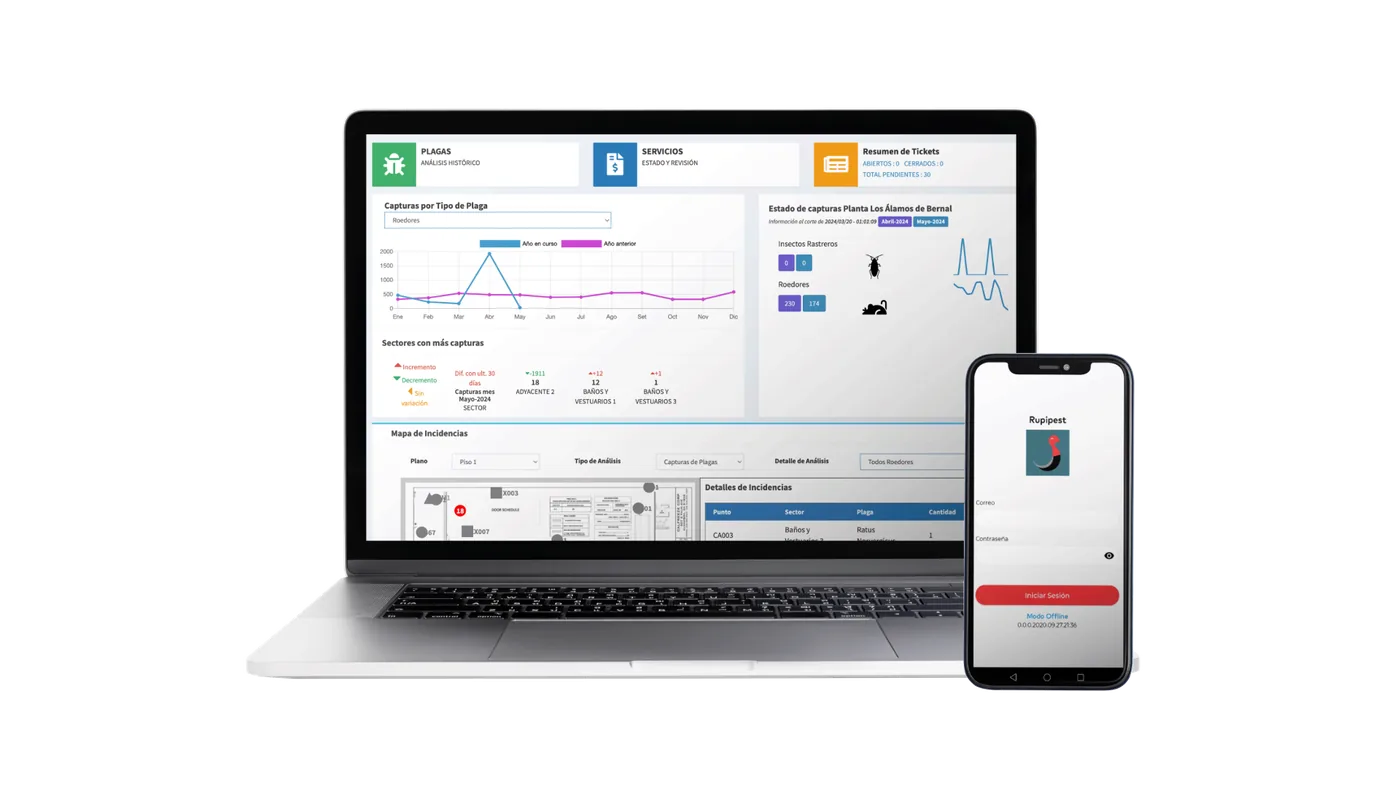

In Integrated Pest Management (IPM), one key is communicating the situation to your clients. It must be simple enough for someone without your technical training to understand, but not so basic that it leaves out important information on risks, activities and findings.
So presenting information well is very important, and you have probably noticed that past a certain number of clients, getting what happens in the field to each client gets harder. That complexity brings its own challenges, and if you don't address them, costs go up unnecessarily.

So how do you tell clients about the status and evolution of their facilities?
Before the information age, you went to the field and filled in a printed form with what you saw. The client kept one copy and the company kept another.
The problem came when reviewing the service over time, especially at larger facilities: you had to gather the service history to analyze activity levels, captures or risks found in inspections over time.
That takes coordination, digging through historical records and presenting the information in a way clients understand. Not every company counts it, but this work is expensive (as well as tedious): collection time, consolidation time and preparation time, among other factors.
A recurring problem
Have you ever had to deliver a report on the 30th and ended up delivering it on the 5th of the next month?

It's more common than it seems. Many IPM companies that start growing and winning more audited clients face problems like:
- How to deliver information on time and in the right format
- How to coordinate the field team and the supervisor to gather information
- How to dig up records from months ago for an annual history
- Where to find the photos taken back then
The traditional fix is to hire someone to help put the reports together. It may look like a good solution at first, but it doesn't scale.
If you want your business to grow, throwing money at the problem only treats the symptoms. Long-term growth isn't sustainable that way.
In my years meeting with pest control companies, this approach hits its ceiling at two (sometimes three) people dedicated to coordinating and writing reports. One more person eats whatever margin is left, and quality inevitably suffers.
So what do companies do at this point? The same thing businesses have done since the first one opened: optimize.

How do you optimize pest control reporting? First, isolate three clear needs:
- Collect information in the field
- Store service information
- Present service information
Today, several tools let you do this reasonably well. Covering these three points removes the need for one or more people doing it full time at high cost. If that person is you, it frees you to focus on strategic parts of your business: sales, client follow-up, prospecting.
The Rupipest way
Rupipest covers all three. First, you tell the system how you want to run field operations (yes, you can define quick processes for non-audited accounts and rigorous, detailed processes for audited clients).
Then, in the field, a technician with our app scans the control points (bait stations, traps, pheromones, gel, fumigation, etc.) and the system tells them what to do based on what the company defined.
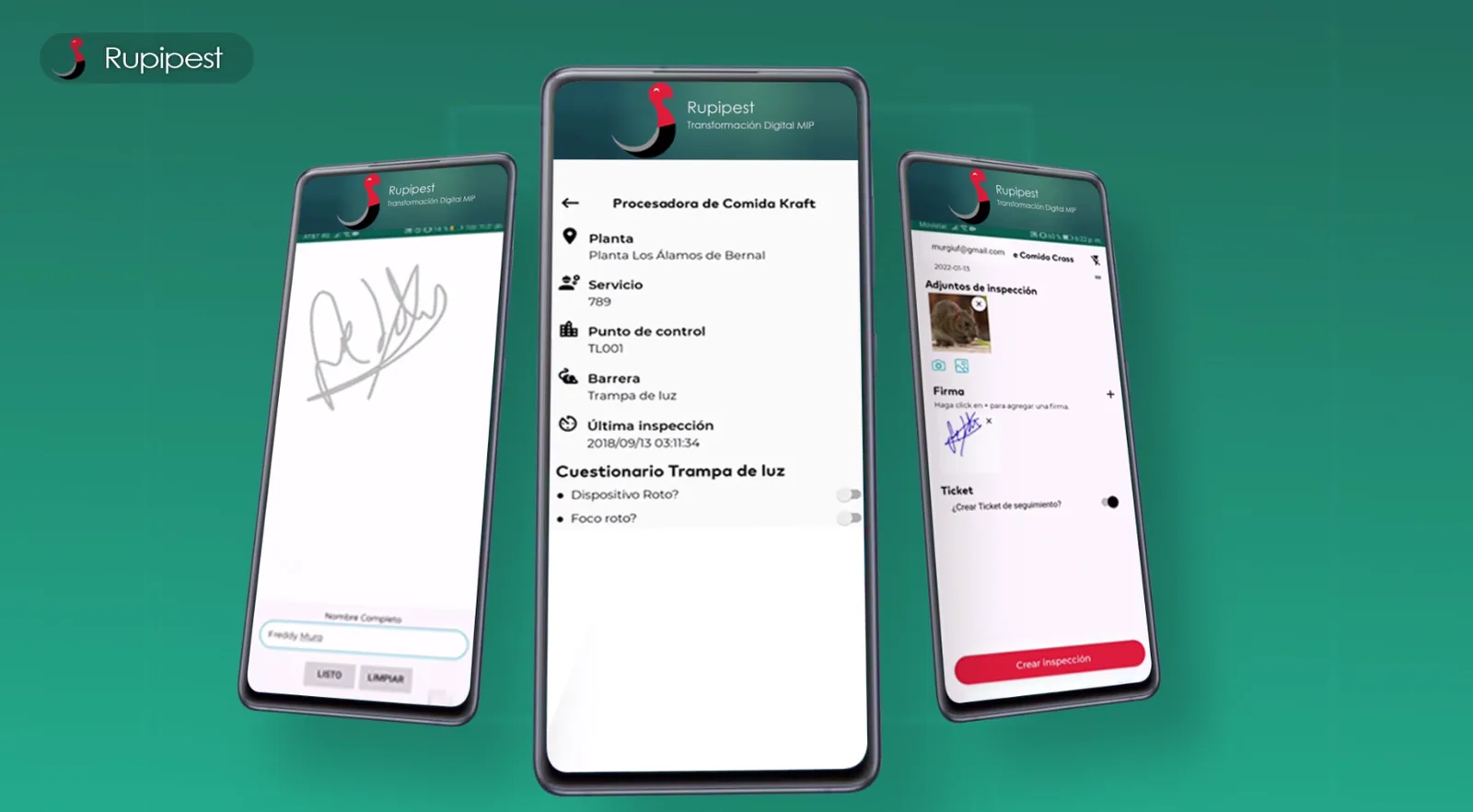
You've probably noticed, but I'll say it anyway: this is how you make sure field work is standardized ;)
When the technician finishes the work (an inspection), the system already has the information, available for you and your clients to review.
And of course, reports are generated automatically!
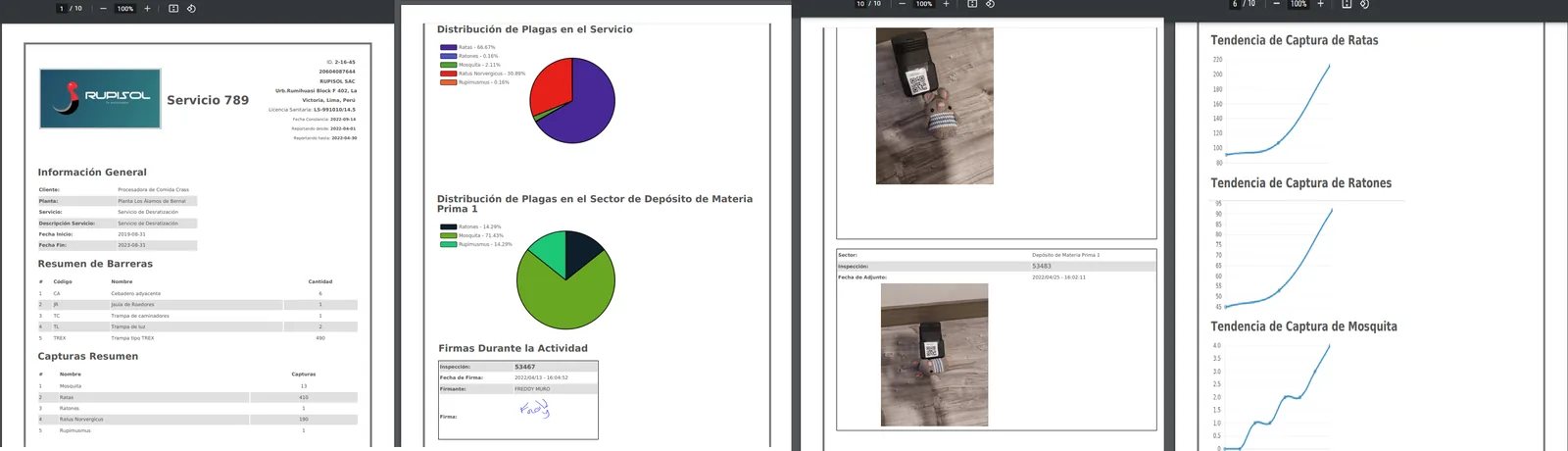
The long, tedious chain of collecting, consolidating and presenting disappears. Your clients don't even have to wait until the end of the month to see how their facilities are doing. And if your client has a quality department, they will notice the difference between your service and the competition's.