
A persistent problem in grain storage is how long the grain stays there, which can trigger serious pest problems. In pest control, every activity is crucial to make sure goods reach their destination without risk. Here we look at the consequences of finding pests in grain, how to store it correctly and the essential actions during storage.
Consequences of finding pests in grain
Finding pests in grain can be devastating for your clients and for your company's reputation. Rejected loads, prolonged re-fumigation and lost credibility are just some of the consequences. Professionalism and prevention are key to avoiding them.
How to store grain properly
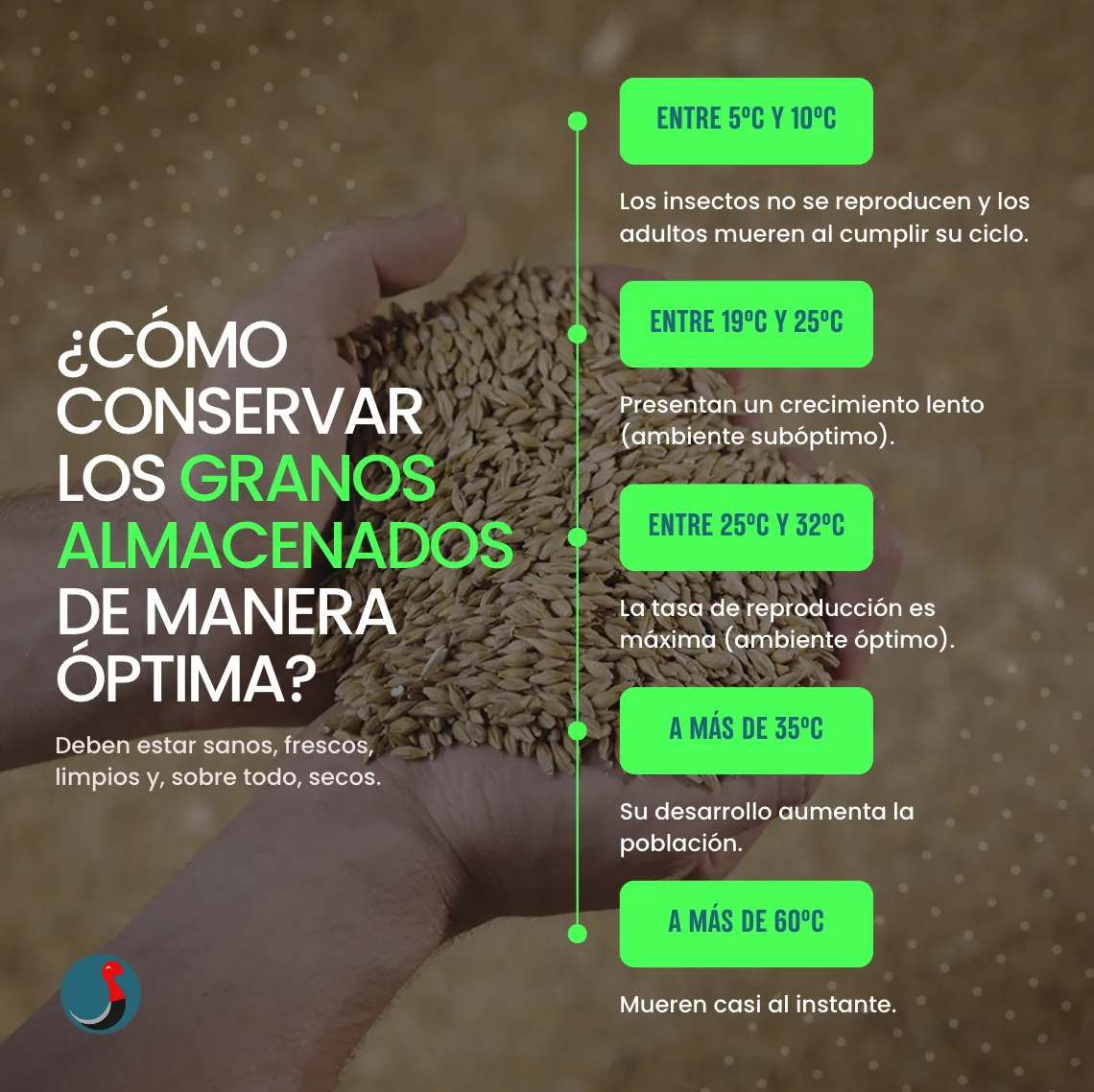
Grain quality is essential to avoid pest problems. Grain should be sound, fresh, clean and, above all, dry. Temperature also plays a crucial role, from levels that inhibit reproduction to levels that accelerate it. Keeping the silo below 20 °C (68 °F) contributes significantly to preservation. Knowing which pests attack grain is just as important to apply the right measures for each species.
- 5–10 °C (41–50 °F): insects don't reproduce and adults die at the end of their cycle
- 19–25 °C (66–77 °F): slow growth (suboptimal conditions)
- 25–32 °C (77–90 °F): maximum reproduction rate (optimal conditions)
- Above 35 °C (95 °F): development increases the population
- Above 60 °C (140 °F): they die almost instantly
Watch the full stored grain talk (in Spanish)
Crucial actions during storage
Constant monitoring is key. Report grain condition weekly, check quality and facility conditions, and fumigate regularly (every 28 to 32 days). A fumigation program applies when grain stays stored for more than 60 days (for example, from field to warehouse).
Rupipest, your strategic ally
Rupipest helps you track not only the pests you manage but also variables such as environmental conditions. During the field inspection you can create a ticket with photo evidence to show your client improvement opportunities. With Rupipest you become your client's strategic partner, proving your commitment to quality and professionalism at every step.